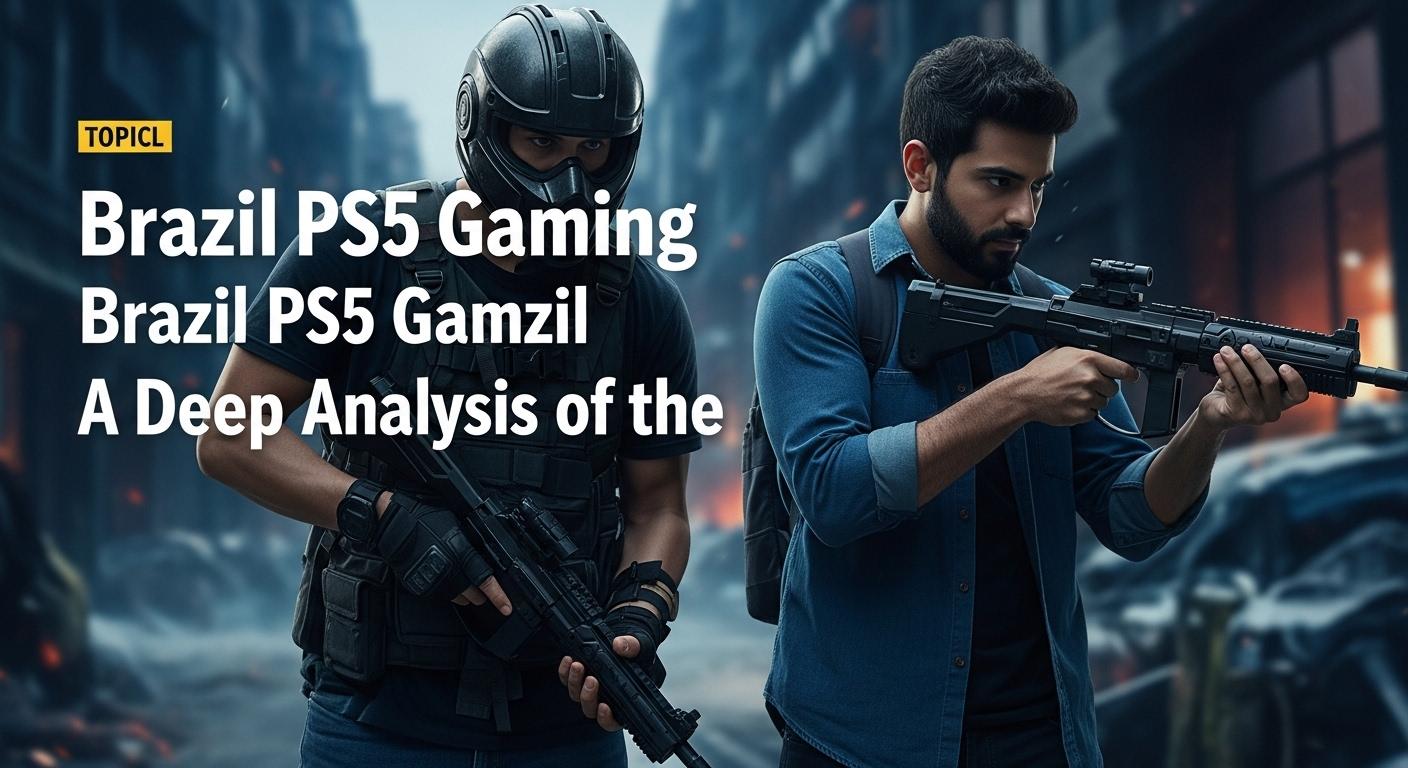
Editorial illustration of a Brazilian PS5 gamer with market data overlays.
Updated: April 21, 2026
For brazil PS5 Gaming Brazil, the question is not merely whether the PlayStation 5 will be popular, but how supply constraints, tax regimes, and a rapidly expanding digital ecosystem will determine the pace and pattern of adoption across Brazil. This analysis examines the forces at work in the market, the behavior of Brazilian gamers, and the strategic stakes for Sony and retailers as they navigate a landscape defined by currency volatility, regional pricing, and evolving online services.
Market Landscape
Brazil continues to exhibit strong appetite for home gaming hardware, even as import costs and local taxes complicate price parity with other regions. The PS5’s availability depends on global production volumes as well as Brazil-specific logistics, including customs clearance times and distributor commitments. In a market that favors bundle offers and financing options, retailers push for predictable stock programs to minimize the opportunity cost of a missed sale. Currency swings can amplify the base price in BRL, making the console feel comparatively dear to first-time buyers and casual players alike. Yet the tailwinds are real: a growing community of content creators, streamers, and indie developers amplifies the perceived value of owning a modern console, beyond raw horsepower or exclusive lineups.
Pricing strategies matter deeply in Brazil. While the digital storefronts enable access to global catalogs, the perceived gap between local and international pricing remains a friction point. Sony’s presence in the region is not limited to hardware sales; services such as PlayStation Plus, cloud gaming options, and a localized store offering language options and regional promotions contribute to a broader value proposition. Local warranty considerations, service networks, and the availability of replacement parts influence buying confidence in a market where after-sales support can determine long-term satisfaction as much as launch-day performance.
Consumer Behavior
Brazilian gamers increasingly value a holistic gaming package: a console that pairs with a robust subscription tier, access to a diverse library of games—ranging from international blockbusters to regionally relevant indie titles—and reliable online infrastructure. The expansion of broadband access in urban and peri-urban areas has accelerated online play and social gaming, reinforcing the appeal of PS Plus and cloud options as practical complements to the PS5’s hardware capabilities. Yet affordability remains a core constraint for many potential buyers, driving demand for financing, trade-ins, and second-hand markets where price sensitivity is highest. In this context, promotions that bundle hardware with service credits or game vouchers can shift the cost of entry from a single purchase to a manageable monthly expense, which aligns with Brazilian consumer budgeting patterns.
Language localization, regional content curation, and community events also shape engagement. The Brazilian gamer community is highly active on social platforms, with local creators and streamers amplifying the value of exclusives and platform-first releases. Sony’s ability to deliver culturally resonant marketing, credible local support, and timely software updates can translate into a more resilient consumer base, even when macroeconomic conditions fluctuate. In short, the Brazil market rewards a package approach: hardware, services, and a steady cadence of locally relevant experiences that justify ongoing investment in a PS5 ecosystem.
Strategy and Partnerships
Strategic partnerships—between Sony, retailers, and financial institutions—are increasingly central to sustaining momentum in the Brazilian market. Financing programs that reduce up-front burden can widen the potential customer base, while strong retail partnerships help ensure stock availability and warranty coverage. Content localization, including Portuguese language support and region-specific game suggestions, adds incremental value that can turn a one-time purchase into a durable, ongoing relationship with the brand. For developers and publishers, Brazil remains a promising arena for audience growth, with strong interest in both major franchises and locally developed titles that resonate with Brazilian sensibilities and humor. Partnerships with streaming platforms and esports ecosystems also expand the PS5’s utility beyond single-player experiences, enabling shared experiences that strengthen community bonds around the platform.
From Sony’s perspective, maintaining a balanced approach to pricing, service quality, and content variety is essential. The company must navigate ongoing macroeconomic uncertainty while preserving a sense of value and reliability for Brazilian players. Strategic pricing that accounts for local purchasing power, combined with promotions tied to PS Plus tiers or hardware bundles, can help sustain long-term adoption. Equally important is the endurance of the service backbone: a stable online experience, responsive customer support, and transparent repair channels. Together, these factors influence not just immediate sales, but long-term brand loyalty in a market where trust is earned incrementally through consistent performance.
Scenario Framing for 2026–27
Three plausible trajectories could shape the Brazilian PS5 ecosystem in the coming years, each anchored in macroeconomic trajectories, currency stability, and how aggressively Sony expands its localization and services in the region. These scenarios are not predictions but ways to frame strategic planning and risk assessment.
- Optimistic trajectory: Currency stabilization and tax policy clarity reduce price volatility. Sony accelerates regional promotions, expands financing options, and expands PS Plus integrations with Brazilian payment rails. Availability improves across retailers, and local content partnerships proliferate, lifting console attach rates and subscription growth.
- Baseline trajectory: Moderate inflation and steady imports keep price gaps manageable. Promotions and bundles sustain demand, while online services gradually deepen engagement. The growth of indie titles and local studios adds value, though supply constraints still temper upside momentum.
- Challenging trajectory: Persistent macroeconomic headwinds or policy shifts raise costs and tighten credit. Stockouts recur, discounts erode margin, and consumer fatigue grows as price-to-value perceptions tighten. In this scenario, second-hand markets and informal financing may become more prominent, with potential impacts on new-unit sales.
Actionable Takeaways
- Retailers should prioritize stock discipline and predictable bundles that pair PS5 hardware with PS Plus or game vouchers to reduce upfront costs for Brazilian consumers.
- Sony and local partners must strengthen warranty and service networks to build trust, especially in regions with uneven infrastructure and longer repair cycles.
- Publishers and studios can tailor campaigns around Portuguese-language experiences and culturally resonant content to deepen attachment to the platform.
- Financing options and flexible payment methods can broaden access, particularly for first-time buyers and younger players with tight budgets.
- Investing in data-driven marketing, community events, and creator partnerships will help sustain engagement beyond launch windows and cultivate long-term loyalty.
Source Context
For readers seeking broader context on macroeconomic conditions and policy signals that influence consumer electronics and entertainment investments in Brazil, the following sources provide relevant background and perspectives: